

8 Best Crypto Mining Hardware 2025 for Maximum Profit

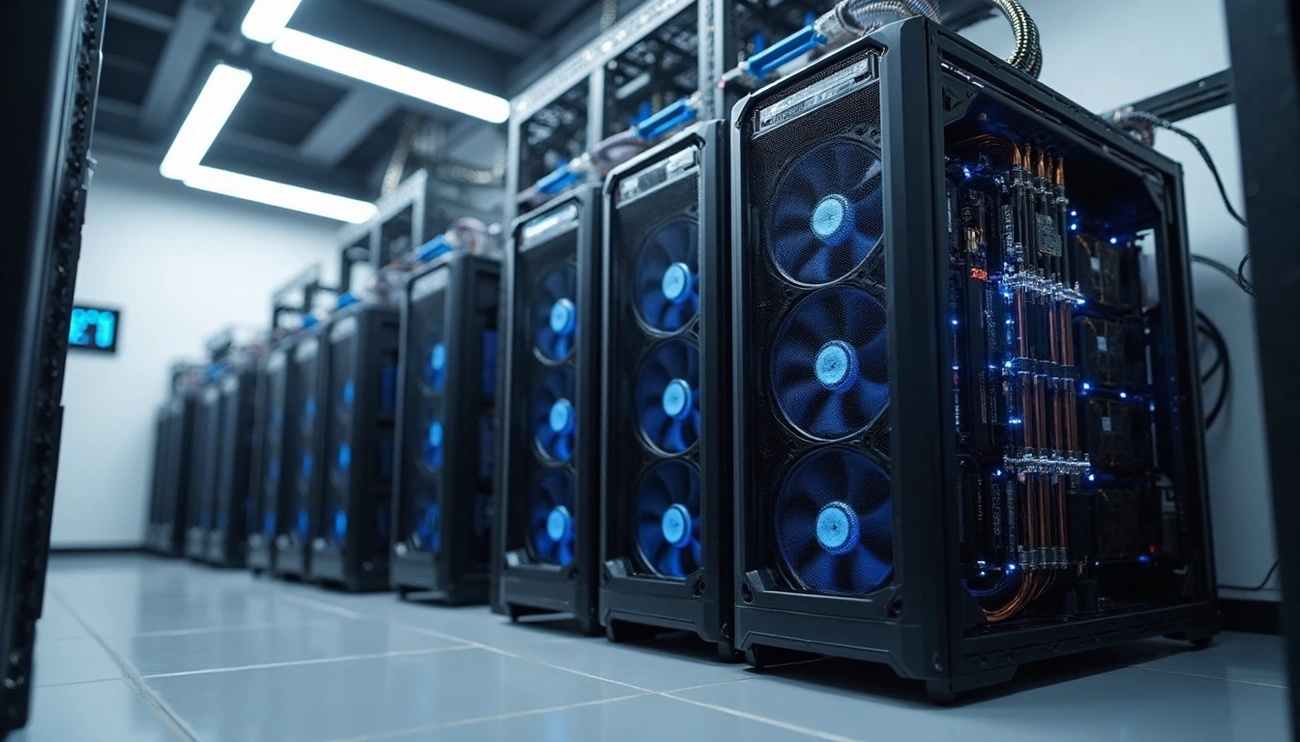
The crypto mining hardware landscape has reached new heights of power and efficiency in 2025. The Bitmain Antminer S21e XP Hyd 3U leads the pack as the most profitable Bitcoin mining machine available today. This powerhouse delivers 860 TH/s hashrate and uses 11180W of power. The Antminer S21 XP Hydro generates daily profits around $17.70 with a 473 TH/s hashrate at $0.06/kWh electricity cost. Another strong contender, the Whatsminer M63 Hydro, packs a powerful 412 TH/s hashrate that works great for Bitcoin and Bitcoin Cash mining.
ASIC devices have become a game-changer in the crypto mining industry. These machines let users mine cryptocurrencies faster than ever before. The most profitable crypto miners in 2025 streamline processes with machines that balance high hash rates and power usage. Modern mining machines use between 2kWh to 7kWh, and their prices vary substantially based on their capabilities. BullMiners has become the go-to destination to buy legitimate mining devices that offer competitive prices and quick delivery.
This piece will get into the top 8 crypto mining hardware options available in 2025. You’ll learn how to pick the right machine that fits your needs. We’ll break down costs, ROI calculations and share expert tips to help you maximize your mining profits.
Top 8 Crypto Mining Hardware Picks for 2025

Image Source: ECOS
Picking the right crypto mining hardware in 2025 needs a good balance of performance, efficiency, and cost. Let’s look at what expert miners use to get the most profits.
1. Bitmain Antminer S21 XP Hyd – Best overall performance
The Antminer S21 XP Hyd leads the Bitcoin mining pack with an impressive hashrate of 473 TH/s and efficiency of 12 J/TH. This water-cooled powerhouse hit the market in June 2024. It uses about 5676 watts and stays quiet at 50dB compared to other air-cooled options. The advanced hydro-cooling system helps it perform 75% better than its air-cooled version that runs at 270 TH/s. Miners can earn around $17.70 daily when electricity costs $0.06/kWh.
2. MicroBT WhatsMiner M66S++ – Best for energy efficiency
The MicroBT WhatsMiner M66S++ shines in efficiency with 348 TH/s and power optimization at 15.5 J/TH. This liquid-cooled miner uses 5394W and brings in about $7.23 daily with electricity at $0.10/kWh. Since its December 2024 release, the M66S++ mines Bitcoin, BitcoinCash, and other SHA-256 cryptocurrencies. Its liquid cooling system keeps performance steady during long runs, making it great for miners who want lasting efficiency.
3. Bitdeer SealMiner A2 Pro Hyd – Best value for money
The Bitdeer SealMiner A2 Pro Hyd costs around $3,958 and gives great value with 500 TH/s hashrate and 14.9 J/TH efficiency. This water-cooled unit uses 7450W and runs quietly at 50dB. Miners earn about $11.33 daily with electricity at $0.10/kWh. The hydro-cooling system keeps performance steady and needs less maintenance, which helps miners get better returns on their investment.
4. IceRiver ALEO AE1 Lite – Best for home mining
Home miners love the IceRiver AE1 Lite because it runs quietly at 45dB and fits in small spaces. It mines the zkSNARK algorithm for ALEO at 250-300 MH/s while using just 500W. The air-cooled miner works at 1.67 J/MH efficiency and earns about $6.46 daily with $0.10/kWh electricity. Its small size (205×110×202mm) and low power needs work great in homes without special mining setups.
5. VolcMiner D1 Hydro – Best for altcoin mining
The VolcMiner D1 Hydro serves altcoin miners well with 33 GH/s on the Scrypt algorithm. It mines both Dogecoin and Litecoin at once. The miner runs at 0.28 J/MH efficiency, uses 9300W power, and brings in about $29.92 daily with $0.10/kWh electricity. Its liquid cooling keeps things running smoothly and quietly, making it perfect to broaden beyond Bitcoin.
6. Canaan Avalon A1566 – Best for mid-scale operations
The Canaan Avalon A1566 runs at 185 TH/s using 3420W power with 18.5 J/T efficiency. This air-cooled miner works well for medium-sized setups and earns about $4.82 daily with $0.06/kWh electricity. It works reliably in temperatures from -5°C to 35°C. The A1566 also mines multiple SHA-256 coins like BTC, BCH, and DGB.
7. BitChimney Space Heater S19K Pro – Best dual-purpose miner
The clever BitChimney Space Heater S19K Pro mines Bitcoin while heating your home. It delivers 31 TH/s and uses 750W. Running at 18.5-19 J/T efficiency, this plug-and-play unit works with regular 120V outlets and stays quiet at 49dB. It comes with WiFi and LuxOS firmware, letting you control temperature through a web interface. This miner helps cut heating costs in winter months.
8. Goldshell AE Max – Best for zkSNARK algorithm
The Goldshell AE Max focuses on the zkSNARK algorithm with a 360 MH/s hashrate for ALEO mining. It uses 3300W power at 9.17 J/MH efficiency and earns about $9.89 daily with $0.04/kWh electricity. This May 2025 release has four fans for air cooling and works in 5-45°C temperatures. BullMiners sells these miners with good prices and quick shipping.
How to Choose the Right Crypto Mining Machine
The right crypto mining machine can make or break your mining venture. Here’s what experienced miners look at when they choose their hardware.
Understand your mining goals
Your mining purpose shapes everything – profit or hobby. Profit-focused miners need high-efficiency ASIC miners, while hobbyists might opt for machines with lower original costs. Think about your space, power setup, and investment timeline. Quick-return seekers focus on fast ROI. Long-term operators invest in pricier but reliable machines that stay profitable despite difficulty increases.
Compare hash rate vs power consumption
Hash rate to power consumption ratio is vital for mining profitability. Miners measure this ratio in joules per terahash (J/TH) for Bitcoin miners. To name just one example, see how a miner with 30 J/TH efficiency uses about 33% less power than one running at 45 J/TH for a similar hashrate. The lowest J/TH value works best – the Antminer S21 XP’s 13.5 J/TH shows top efficiency today.
Check algorithm compatibility
Each mining hardware works with specific algorithms. Bitcoin runs on SHA-256, Litecoin and Dogecoin use Scrypt, while other cryptocurrencies run on Equihash or RandomX. Most ASIC miners work with just one algorithm, like SHA-256 for Bitcoin. Matching your hardware to your chosen cryptocurrency is significant. Some algorithms resist ASIC mining to keep mining decentralized.
Consider noise levels for home use
Standard ASIC miners create 70-85 dB of noise – like a vacuum cleaner next to you. Home miners should look for models under 60 dB or specialized “home” versions with better cooling systems. Sound-dampening boxes can cut noise by more than 20 decibels. BullMiners offers quieter miners that work well in homes, with quick delivery at competitive prices.
Evaluate cooling system requirements
Today’s miners use three main cooling methods: air cooling (common but noisy), hydro cooling (efficient and quieter), and immersion cooling (best performance but costly). Climate, space, and budget affect your choice. Air cooling works in cool areas, while warmer regions need hydro or immersion cooling for best results.
Look for firmware upgrade options
Firmware updates improve mining efficiency. Many miners support third-party firmware that optimizes power use and hashrate. Luxor’s Antminer firmware (LuxOS) works with multiple models and improves efficiency through custom settings. Check if your chosen miner supports firmware upgrades before you buy.
Cost Breakdown and ROI Calculation

Image Source: Hashrate Index
Let’s explore the financial side of crypto mining and learn what you need to know before buying mining equipment.
Original hardware cost
Mining machines that deliver good profits cost more than $1000 in 2025. The latest mining equipment like the Bitmain Antminer S21 XP costs around $5802, and the WhatsMiner M66S+ comes in at approximately $6232. Bitcoin’s price jumped from $20,000 in 2022 to over $108,000 in 2024. This is a big deal as it means that the cost per terahash dropped to $16 per TH in 2025, compared to $80 per TH in 2022.
Electricity and operational costs
Miners spend most of their money on electricity, which makes up 70-80% of running costs. The rates change significantly based on where you mine:
- Low-cost regions ($0.05-0.10/kWh): Parts of Washington, Idaho, Quebec
- Medium-cost regions ($0.10-0.20/kWh): Most U.S. states, parts of Canada
- High-cost regions ($0.20-0.40+/kWh): California, New York, Germany
Mining a single Bitcoin costs as little as $1200 in areas with cheap electricity, while others might pay over $15,000.
Maintenance and repair expenses
Running costs go beyond just electricity. You’ll need cooling systems, housing, and staff. Regular maintenance keeps operations smooth and equipment lasting longer. Home miners mainly need to keep their equipment clean with proper ventilation.
Expected mining rewards
Miners earn from two sources: block rewards (currently 3.125 BTC per block) and transaction fees. Transaction fees make up just 1.3% of total block rewards in 2025, which shows how important block subsidies are.
How to calculate ROI
Here’s a simple ROI formula:
- Add up your starting costs (hardware, installation)
- Figure out monthly expenses (electricity, internet, maintenance)
- Calculate monthly income (hashrate × expected BTC × current price)
- ROI % = ((Monthly income – Monthly expenses) ÷ Initial investment) × 100
Here’s an example: With $10,000 invested, $1000 monthly income, and $500 monthly expenses, your ROI would be 5% per month.
Tools to estimate profitability
These online calculators help you figure out mining profits:
- WhatToMine: Compares profits across different cryptocurrencies
- CryptoCompare: Shows detailed calculations based on hashrate and power usage
- Minerstat: Shows ROI timelines from 1 day to 1 year
BullMiners stands out as the best option right now for reliable mining hardware at competitive prices with quick delivery.
Where to Buy Legit Mining Hardware in 2025
The crypto mining industry has many scams that make it hard to find trustworthy hardware vendors. You need reliable sources to get genuine equipment and avoid fake or broken devices.
Why BullMiners is the best place to buy
BullMiners has proven itself as the most dependable partner in crypto mining hardware. Their prices beat the competition and they ship faster than expected – usually within six days. The customer support team responds quickly, typically within two hours. Miners love their authentic products and transparent pricing that includes all taxes upfront.
Avoiding scams and fake sellers
Scammers in the crypto mining world use clever tricks to fool buyers. Watch out for fake cloud mining platforms, counterfeit hardware, and nonexistent hosting services. These fraudsters build professional websites with stolen product photos and made-up customer reviews. Red flags include prices that seem too good to be true and promises of guaranteed returns.
What to look for in a trusted vendor
Real vendors share their company details openly and show actual photos of their facilities. Take time to read reviews on independent sites like Trustpilot. Check if the business is properly registered and look at their presence on different platforms. Good companies list clear contact details and respond to customer questions quickly.
Shipping, warranty, and support considerations
The best manufacturers back their miners with warranties lasting 180-360 days, depending on the model. Look at how they handle shipping – trusted sellers provide tracking numbers and delivery estimates. A vendor’s customer service quality tells you a lot about their legitimacy, so test how fast they respond before you buy.
Tips to Maximize Profit from Your Mining Rig

Image Source: Braiins
Maximizing mining profits in 2025 goes beyond owning top-tier hardware. These expert strategies will boost your earnings substantially without spending more money.
Join a reliable mining pool
Bitcoin’s increasing hashrate means solo mining pays off only for large operations. Mining pools combine computational resources and give you better chances to receive consistent rewards. The best pools have reasonable fees, suitable payout thresholds, and clear reward distribution systems. You’ll get more regular payouts from larger pools, while smaller ones might give you bigger but less frequent rewards.
Use efficient mining software
The right software improves your hashrate by up to 18%. CudoMiner switches between coins automatically to maximize profits and boosts returns by up to 30% with its optimization features. Awesome Miner switches profits based on live power consumption and market conditions.
Optimize voltage and clock speeds
You can cut power consumption by 10-20% through undervolting while keeping performance steady. When overclocking, boost voltage and clock speed step by step to avoid crashes. The sweet spot between these settings gives you maximum performance per watt.
Mine during off-peak electricity hours
Electricity rates drop nowhere near normal during late night hours in many regions. Texas sometimes offers negative electricity prices between 1-4 AM. MiningSentry helps adjust your operations automatically based on electricity price thresholds.
Keep your rig clean and cool
Dust buildup blocks airflow and causes overheating – it’s every miner’s nightmare. Clean your equipment monthly with an anti-static brush. Your intake air temperature should stay between 10-25°C. Temperatures above 30°C can trigger protection mechanisms that stop mining completely.
Monitor performance regularly
Automated health checks send alerts for critical events to your email or mobile apps. Keep an eye on your hashrate, temperature, and power consumption to spot problems early. Minerstat’s heatmap visualization helps you quickly spot hotspots in your mining facility.
Conclusion
Crypto mining keeps getting faster as we move through 2025. Mining hardware becomes more powerful and efficient each day. The landscape has changed completely from a few years ago. Back then, mining Bitcoin at home seemed almost impossible because of high costs and complexity.
Miners now have more choices than ever before. The powerhouse Bitmain Antminer S21 XP Hyd delivers an impressive 473 TH/s hashrate. Altcoin enthusiasts can opt for specialized equipment like the VolcMiner D1 Hydro. But powerful hardware alone won’t guarantee success. You need smart strategies about efficiency, costs, and ways to optimize your operation.
Efficiency remains the key to making profits. A machine that uses 30 J/TH will outperform one using 45 J/TH over time, whatever the original cost differences. Miners should focus on this metric more than raw hashrate when buying equipment.
Your local electricity costs matter a lot. They make up 70-80% of what you spend to run your operation. This becomes crucial as mining gets harder and block rewards get smaller.
BullMiners stands out as a 2025-old trusted source for genuine mining devices. They offer competitive prices and quick delivery. Their honest approach and quick customer service make them reliable partners in an industry full of scams and fake equipment.
Once your mining operation runs, you can boost profits through several methods. Join reliable mining pools, optimize voltage settings, and maintain proper cooling to improve your bottom line. These strategies often separate miners who barely break even from those who make real money.
Crypto mining has its challenges. Yet it offers great opportunities if you learn the technical details and understand market trends. This piece gives you the right hardware knowledge and strategies. You can now guide yourself through the complex digital world of cryptocurrency mining and boost your chances of success in this competitive field.
Key Takeaways
Here are the essential insights every crypto miner needs to know before investing in 2025 hardware:
• Efficiency trumps raw power: Prioritize J/TH ratios over hashrate – a 30 J/TH miner consumes 33% less electricity than 45 J/TH for identical performance.
• Electricity costs dominate profitability: With power representing 70-80% of operational expenses, securing rates below $0.10/kWh is crucial for sustainable mining profits.
• Hardware costs have plummeted: Despite Bitcoin’s price surge to $108,000+, cost per terahash dropped from $80 in 2022 to just $16 in 2025.
• Hydro-cooling delivers superior ROI: Water-cooled miners like the Antminer S21 XP Hyd outperform air-cooled versions by 75% while operating 20dB quieter.
• Vendor selection prevents costly mistakes: Use established suppliers like BullMiners to avoid the growing number of sophisticated mining hardware scams plaguing the industry.
The crypto mining landscape in 2025 rewards informed decision-making over impulse purchases. Success depends on balancing initial investment with long-term operational efficiency, while avoiding the numerous pitfalls that trap inexperienced miners.
FAQs
Q1. What is the most efficient Bitcoin mining hardware in 2025? The Bitmain Antminer S21 XP Hyd is currently the most efficient Bitcoin miner, offering 473 TH/s hashrate with 12 J/TH efficiency. It uses water cooling to deliver superior performance while maintaining low noise levels.
Q2. How much does electricity cost impact mining profitability? Electricity costs typically account for 70-80% of operational expenses in crypto mining. Rates below $0.10/kWh are generally considered favorable for profitable mining, while costs above $0.20/kWh can make mining unprofitable in many cases.
Q3. Is it still possible to mine cryptocurrencies at home in 2025? Yes, home mining is still possible in 2025. Devices like the IceRiver ALEO AE1 Lite are designed for home use, offering quiet operation and modest power requirements. However, profitability depends heavily on local electricity costs and chosen cryptocurrency.
Q4. How can I calculate the return on investment (ROI) for a mining rig? To calculate ROI, determine your initial costs (hardware, installation), monthly expenses (electricity, maintenance), and estimated monthly income (based on hashrate and current crypto prices). The basic formula is: ROI % = ((Monthly income – Monthly expenses) ÷ Initial investment) × 100.
Q5. What are some tips to maximize mining profits? To maximize profits, join a reliable mining pool, use efficient mining software, optimize voltage and clock speeds, mine during off-peak electricity hours, keep your equipment clean and cool, and monitor performance regularly. These strategies can significantly boost earnings without additional hardware investment.