

Best Bitcoin Mining Hardware 2026: Complete Equipment Guide

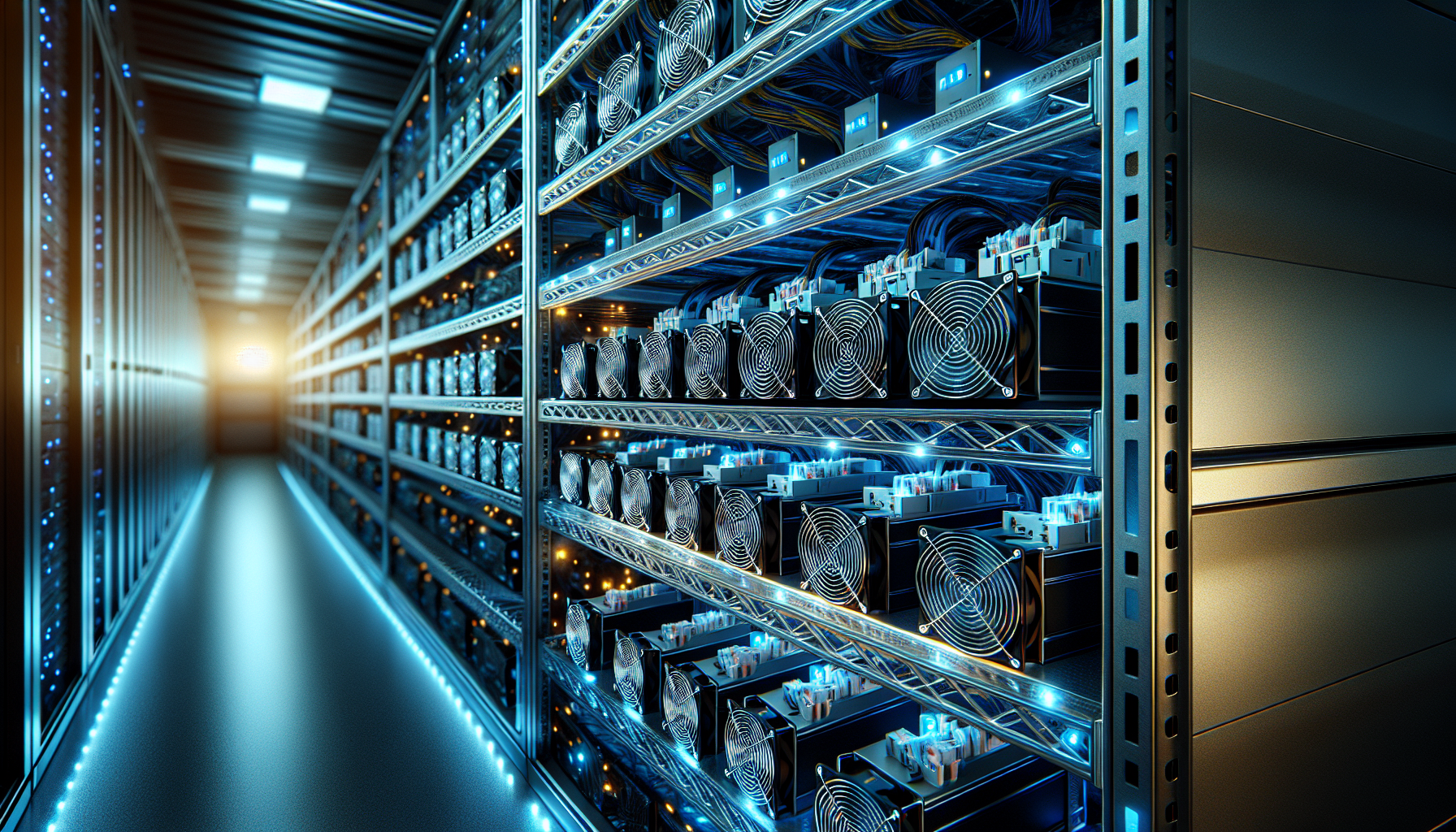
The best Bitcoin mining hardware in 2026 includes the Bitmain Antminer S21 Pro (234 TH/s, 15 J/TH, £3,500-£5,000), MicroBT Whatsminer M63S Hydro (228 TH/s, 14.4 J/TH, £4,200-£5,800), and Canaan Avalon Made A1566 (185 TH/s, 18.5 J/TH, £2,800-£3,600). Choose based on electricity costs—below £0.08/kWh favors efficiency; above £0.10/kWh requires cutting-edge J/TH ratios for profitability.
Bitcoin mining profitability in 2026 depends entirely on hardware efficiency as network difficulty reaches all-time highs and block rewards remain at post-halving 3.125 BTC. Selecting the right ASIC miner balances upfront costs, power consumption, hashrate performance, and long-term ROI potential.
This comprehensive guide examines top Bitcoin mining hardware available in the UK and Europe, comparing flagship models, mid-range options, and emerging technologies to help you make informed equipment decisions.
What Are the Top Bitcoin Mining ASICs in 2026?
The top Bitcoin mining ASICs in 2026 are the Bitmain Antminer S21 Pro (234 TH/s, 15 J/TH efficiency), MicroBT Whatsminer M63S Hydro (228 TH/s, 14.4 J/TH efficiency), and Whatsminer M60S+ (220 TH/s, 15.5 J/TH efficiency). These flagship models deliver the best balance of hashrate and power efficiency for profitable mining at current network difficulty levels.
Bitmain Antminer S21 Pro: Bitmain’s latest flagship delivers 234 TH/s at 3,510W consumption, achieving industry-leading 15 J/TH efficiency. The S21 Pro features enhanced cooling systems, improved chip architecture, and firmware optimizations that reduce downtime and extend operational life.
Priced £3,500-£5,000 depending on order volume and market conditions, the S21 Pro excels in large-scale operations where maximizing hashrate per square meter matters. Free shipping available from BullMiners.eu with 30-day return policy and UK/Europe warehouse stock.
MicroBT Whatsminer M63S Hydro: MicroBT’s hydro-cooled flagship achieves exceptional 14.4 J/TH efficiency at 228 TH/s hashrate. Liquid cooling enables higher clock speeds, quieter operation, and extended hardware lifespan compared to air-cooled alternatives.
The M63S Hydro suits operations investing in cooling infrastructure for long-term efficiency gains. While more expensive (£4,200-£5,800), the superior efficiency pays dividends in regions with electricity costs above £0.09/kWh.
Whatsminer M60S+: The air-cooled M60S+ provides 220 TH/s at 15.5 J/TH, offering excellent efficiency without hydro cooling requirements. This model balances cutting-edge performance with conventional deployment simplicity.
Priced competitively at £3,200-£4,500, the M60S+ appeals to miners seeking flagship efficiency without committing to liquid cooling infrastructure. It’s ideal for medium-scale operations expanding capacity.
How Much Electricity Do Bitcoin Miners Consume?
Bitcoin miners consume 3,000-3,600W continuously (72-86 kWh daily), costing £7-£26 daily at UK electricity rates (£0.10-£0.30/kWh). A single S21 Pro at £0.15/kWh costs approximately £12.66 daily (£380/month) in electricity. Calculate profitability by comparing mining revenue against power costs using your specific electricity rate.
Electricity represents 60-80% of mining operational costs, making power efficiency critical for profitability. A miner consuming 3,500W running 24/7 uses 2,520 kWh monthly.
Cost Examples by UK Electricity Rates:
At £0.10/kWh (industrial rates): £252/month per miner
At £0.15/kWh (commercial rates): £378/month per miner
At £0.25/kWh (residential rates): £630/month per miner
This reality means the “best” hardware varies by location. Miners with £0.08/kWh electricity can profit with older, less efficient ASICs. Those paying £0.20/kWh require cutting-edge efficiency to remain viable.
Always calculate profitability using your actual electricity rate rather than generic estimates. Many UK miners fail by underestimating power costs or using outdated calculators.
What Is Mining Efficiency (J/TH) and Why Does It Matter?
Mining efficiency measured in joules per terahash (J/TH) determines how much electricity each unit of computational power consumes—lower is better. A 15 J/TH miner uses 15 watts to produce 1 TH/s; a 25 J/TH miner uses 25 watts for the same hashrate. Better efficiency means lower electricity costs and longer profitable operation as network difficulty increases.
Efficiency determines how long equipment remains profitable as difficulty increases and Bitcoin price fluctuates. An ASIC operating at 15 J/TH might remain profitable for 3-4 years, while a 25 J/TH unit becomes uneconomical within 18-24 months despite initially higher hashrate.
Efficiency Comparison Examples:
S21 Pro (15 J/TH): 3,510W for 234 TH/s
S19 XP (21.5 J/TH): 3,010W for 140 TH/s
M30S++ (31 J/TH): 3,472W for 112 TH/s
At £0.15/kWh electricity, the S21 Pro costs £12.66 daily while generating more hashrate and revenue than less efficient alternatives consuming similar power.
Prioritizing efficiency over maximum hashrate provides longer useful life. When next-generation ASICs arrive, the most efficient current models remain competitive longer than high-hashrate but inefficient alternatives.
Where Can You Buy Bitcoin Miners in the UK and Europe?
Buy Bitcoin miners in the UK and Europe from authorized distributors like BullMiners.eu offering Bitmain, MicroBT, and Canaan hardware with full manufacturer warranty, free EU shipping, and 30-day returns. Avoid gray-market sources lacking warranty support—authorized dealers provide legitimate products, customer service, and technical support worth modest price premiums.
Authorized Distributors: Companies like BullMiners.eu maintain manufacturer relationships providing warranty support, authentic products, and professional service. Authorized dealers typically charge higher prices than gray-market sources but provide peace of mind regarding product authenticity and warranty validity.
For miners making substantial investments, these protections justify modest price premiums. BullMiners.eu stocks Antminer, Whatsminer, and Avalon hardware with UK/Europe warehouse locations for fast delivery.
Direct from Manufacturer: Large-scale miners can order directly from Bitmain or MicroBT, typically requiring minimum order quantities (often 100+ units) and accepting extended lead times. Manufacturer-direct purchases offer best pricing but require significant capital.
Smaller miners usually cannot meet minimum order requirements or manage container-scale shipment logistics. Manufacturer sales also lack the personalized support that quality distributors provide.
Secondary Markets: Used ASIC markets offer opportunities to acquire older-generation hardware at significant discounts. Platforms like eBay or specialized mining hardware marketplaces can yield bargains for those willing to accept used equipment.
Secondary market purchases carry elevated risks including missing warranties, unknown operational history, potential undisclosed issues, and scam sellers. Thoroughly verify seller reputation when considering used equipment.
How Long Until You Break Even on Mining Hardware?
Bitcoin mining hardware break-even typically occurs in 12-24 months under favorable conditions (electricity under £0.10/kWh, stable Bitcoin price around £60,000-£80,000, and 3-5% monthly difficulty increases). Bear markets can extend payback to 30-48 months, while some miners never achieve ROI if purchased at market peaks before price corrections.
ROI timelines depend on four variables: equipment cost, electricity price, Bitcoin price, and network difficulty growth. Conservative models should assume difficulty increases of 3% monthly over the ASIC’s operational lifetime.
Example ROI Calculation (S21 Pro):
Purchase price: £4,000
Electricity cost: £0.10/kWh (£252/month)
Bitcoin price: £65,000
Monthly revenue: £520
Monthly profit: £268
Break-even: ~15 months
However, bear markets can extend payback periods to 24-36 months or longer. Some miners never achieve ROI if purchased at market peaks before significant price corrections.
Risk-aware miners should ensure they can sustain operations for at least 24 months without positive returns and still accept the possibility of total capital loss. Mining is inherently speculative—equipment value can plummet if Bitcoin price drops significantly.
What Infrastructure Do You Need for Bitcoin Mining?
Bitcoin mining requires dedicated electrical capacity (3-4kW per miner), cooling/ventilation systems maintaining inlet temperatures below 30°C, stable internet connection, and noise management (miners produce 70-80 decibels). Industrial operations need three-phase power, professional HVAC, and facilities away from residential areas. Home miners require detached buildings or soundproofed spaces.
Electrical Capacity: Each flagship ASIC draws 3,000-4,000W continuous power. A 10-miner operation requires 30-40 kilowatts of available electrical capacity—far exceeding typical residential service.
Electrical installation must meet UK building regulations, include appropriate circuit protection, and provide stable voltage. Mining equipment is sensitive to power quality issues—voltage fluctuations can damage ASICs.
Cooling and Ventilation: ASICs generate enormous heat—a single miner outputs heat equivalent to three hair dryers running continuously. Inadequate cooling causes thermal throttling (reduced hashrate) or complete shutdowns protecting chips from damage.
Home miners typically dedicate garages or outbuildings with significant ventilation. Industrial operations require professional HVAC systems, often exhausting hot air directly outside while drawing cool air through miners.
Noise Management: Mining ASICs are extremely loud—typically 70-80 decibels, comparable to vacuum cleaners or busy traffic. Operating multiple units creates industrial-level noise completely unsuitable for residential environments without soundproofing.
Home miners either allocate detached outbuildings or invest in acoustic enclosures to contain noise. Industrial facilities locate away from residential areas or implement comprehensive soundproofing.
Key Takeaways
- Top Models 2026: Antminer S21 Pro (15 J/TH), Whatsminer M63S Hydro (14.4 J/TH), and M60S+ (15.5 J/TH) lead efficiency rankings
- Efficiency Priority: J/TH efficiency matters more than raw hashrate—15 J/TH miners stay profitable 2x longer than 30 J/TH units
- Electricity Costs: Calculate profitability using YOUR actual electricity rate—£0.08/kWh vs £0.20/kWh dramatically changes viability
- ROI Timeline: Expect 12-24 month break-even under favorable conditions; bear markets extend to 30-48 months or never
- Infrastructure Requirements: Budget for electrical upgrades, cooling systems, and noise management beyond equipment costs
- Buy Authorized: Purchase from authorized EU distributors like BullMiners.eu for warranty support and legitimate products
- Resale Value: Flagship Bitmain/MicroBT models retain 30-50% value after 18-24 months, improving overall ROI calculations
Frequently Asked Questions
Is Bitcoin mining still profitable in 2026?
Yes, Bitcoin mining remains profitable in 2026 for operations with electricity costs below £0.12/kWh using efficient hardware (under 18 J/TH). Industrial miners with £0.06-£0.08/kWh rates achieve strong margins, while home miners paying £0.15-£0.25/kWh struggle to profit. Profitability fluctuates with Bitcoin price—£65,000+ BTC supports wider profitability than £45,000 BTC.
Always calculate your specific electricity costs before purchasing equipment. Online profitability calculators provide rough estimates but use your actual rates for accurate projections.
Can I mine Bitcoin at home in the UK?
Yes, you can mine Bitcoin at home in the UK if you have adequate electrical capacity (dedicated 20-32 amp circuits), ventilation, and noise tolerance. Use garages, outbuildings, or basements with soundproofing. However, residential electricity rates (£0.20-£0.30/kWh) make home mining barely profitable or loss-making unless you have solar panels or off-peak tariffs under £0.12/kWh.
Most successful UK home miners use business premises or farms with commercial electricity rates under £0.15/kWh.
How long do Bitcoin miners last?
Bitcoin miners last 3-6 years physically but become unprofitable sooner as efficiency improves and difficulty increases. Flagship models (S21 Pro, M63S Hydro) might mine profitably for 4-5 years at low electricity costs, while mid-range efficiency miners (S19 XP) become marginal after 2-3 years. Plan for 24-36 month useful life, then potential resale or continued operation if electricity is very cheap.
Hardware reliability is high—Bitmain and MicroBT units run 4-6 years if maintained properly. However, economic obsolescence (can’t compete with newer efficient models) arrives before physical failure.
What’s the difference between air-cooled and hydro-cooled miners?
Air-cooled miners use fans to dissipate heat (standard approach, simpler deployment, louder operation). Hydro-cooled miners circulate liquid through cooling plates (10-15% better efficiency, quieter, higher upfront cost, requires plumbing infrastructure). Hydro cooling suits large operations investing in long-term efficiency; air cooling works for most small-to-medium setups.
Hydro models like the M63S Hydro achieve 14.4 J/TH versus 15-16 J/TH for equivalent air-cooled units—meaningful savings at scale.
Should I buy new or used Bitcoin miners?
Buy new flagship miners (S21 Pro, M63S Hydro) for maximum efficiency and warranty protection if you have capital and plan long-term operation. Buy used mid-range miners (S19 XP, M30S+) only if you have ultra-cheap electricity under £0.08/kWh and can tolerate higher failure risk. Used miners lack warranties and may have hidden wear from abusive operation.
For most UK/Europe miners, new equipment with warranty support justifies the premium over used gear without guarantees.
Where is Bitcoin mining legal in Europe?
Bitcoin mining is legal throughout Europe including the UK, Germany, France, Netherlands, Sweden, Norway, and most EU countries. No special licenses required for individual/business mining operations. However, some regions restrict mining due to energy concerns (certain Swiss cantons, parts of Iceland during shortages). Always verify local electrical codes and business registration requirements.
The UK has no mining-specific regulations—treat it as a business requiring standard company registration and tax compliance.
Do I need to join a mining pool?
Yes, individual miners must join mining pools unless operating 1,000+ miners. Solo mining with 1-10 ASICs could take years to find a block. Pools like Foundry USA, AntPool, or F2Pool provide steady daily payouts based on your contributed hashrate. Pool fees run 1-3% but the consistent income justifies the cost.
Choose pools with 5-15% network hashrate for balance between payout consistency and decentralization support.
Can I use renewable energy for Bitcoin mining?
Yes, solar panels, wind turbines, or hydroelectric power can reduce mining costs significantly. However, renewable intermittency (sun/wind availability) requires battery storage or grid backup for 24/7 operation. Some UK miners use excess solar generation during day, halting at night. Industrial renewable mining operations in Norway, Sweden, and Iceland access cheap hydroelectric and geothermal power.
Calculate renewable ROI separately from mining ROI—solar panels may take 6-10 years to break even independent of mining profitability.
Conclusion
Selecting the best Bitcoin mining hardware in 2026 requires balancing efficiency, cost, electricity rates, and infrastructure capabilities. Flagship models like the Antminer S21 Pro and Whatsminer M63S Hydro represent peak performance for miners with competitive electricity access, while mid-range options suit those with ultra-cheap power or limited budgets.
Success in Bitcoin mining extends beyond hardware selection—proper infrastructure, regular maintenance, realistic financial planning, and professional operations determine profitability. Only those with favorable electricity costs, efficient equipment, and disciplined operations achieve consistent profits in 2026’s competitive environment.
Ready to start mining? Shop authentic Antminer and Whatsminer hardware at BullMiners.eu – Free UK/Europe shipping, authorized warranty, 30-day returns →
Last updated: January 2026